rynda.io gives you a live working picture, and every vessel page links straight to the primary sources — verification is one click away. Coverage and freshness depend on the area and the data type.
How to verify a fact against a primary source
At the bottom of every vessel page sits the "Verify against primary sources" block — links to public regulators and registries with the vessel's IMO number already filled in:
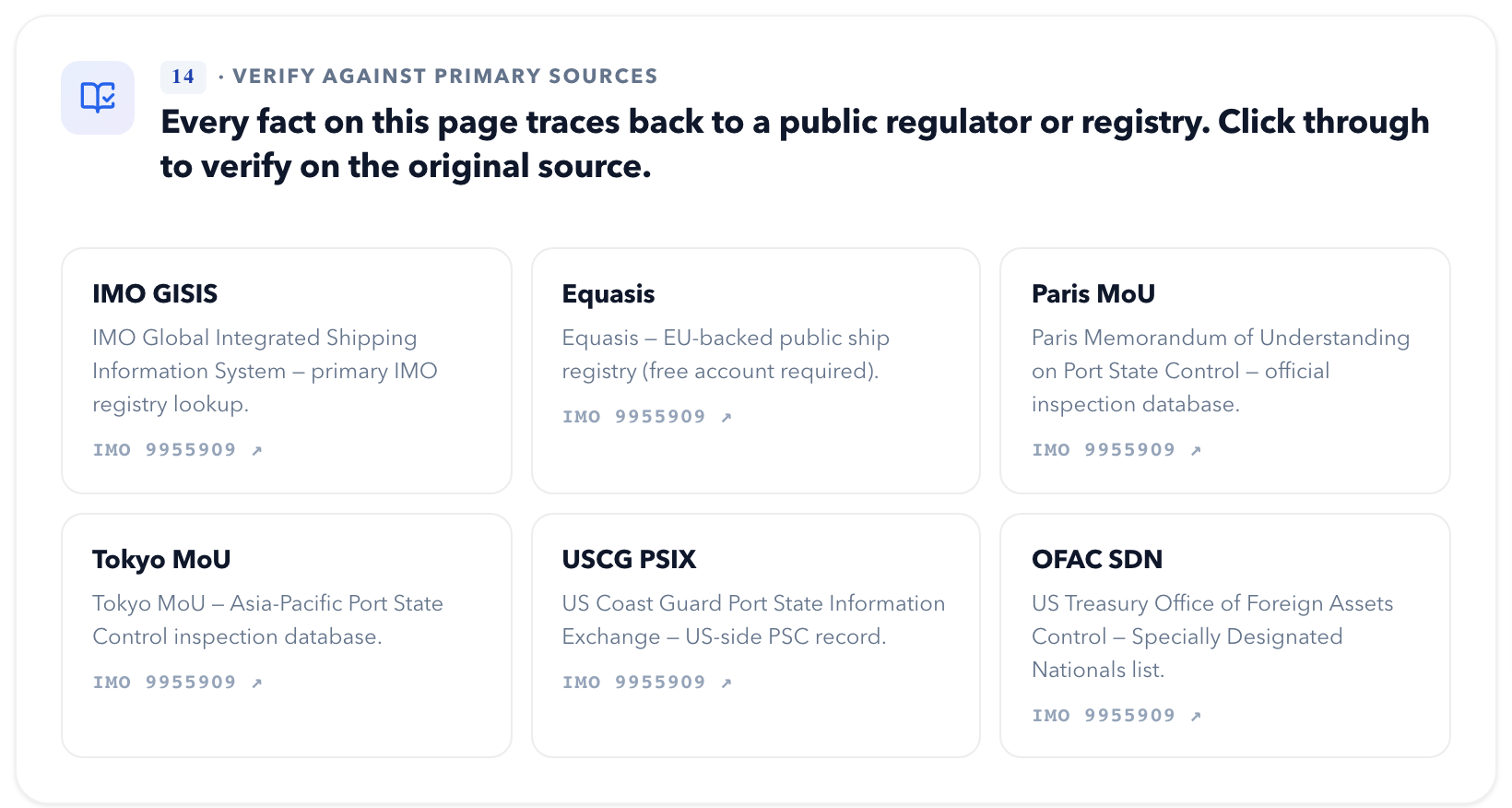
- IMO GISIS — the IMO's primary registry.
- Equasis — the EU-backed public ship registry (a free account is required).
- Paris MoU and Tokyo MoU — the official port state control databases for Europe and Asia-Pacific.
- USCG PSIX — the US port state control registry.
- OFAC SDN — the US Treasury sanctions list.
How to read position freshness
- The time of the last position update is shown on the vessel card and the vessel page.
- A stale position is refreshed automatically when you open the vessel card or page: without an account — for 3 different vessels per 30 days, signed in — without a counter. More: why a vessel has no position.
- Coverage varies by area: busy waters update often, the open ocean less so.
How to read the reference fields
Owners, class and sanctions matches are registry data with record dates. They are enough for a preliminary check; in a dispute or a deal, verify the key fact against the primary source from the block above. A "no matches" line in the sanctions check is the result of screening the lists, not missing data.
Found an error?
Tell us — we will check against the primary source and fix it.
rynda.io is the working picture plus a fast bridge to primary sources; the final decision always rests on the regulator's document.
See also